
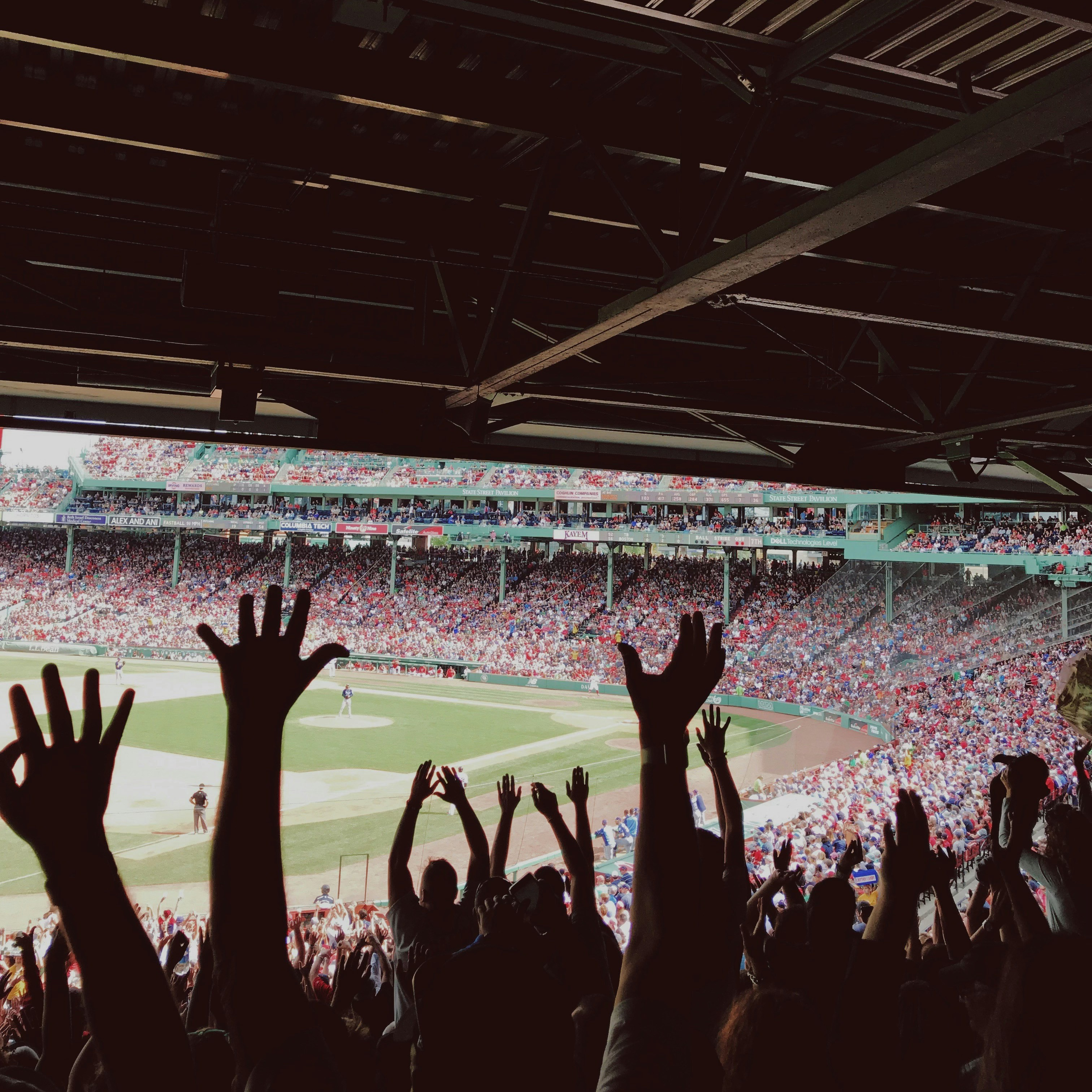
No one expects 100% accuracy in calling “balls” and “strikes” (at least not from human umpires). But, on the eve of Opening Day of the 2026 Major League Baseball (MLB) season, we should expect better than what even the best human umpires are capable of.
Inexplicably, this is the first full MLB season with the Automatic Ball-Strike Challenge Review technology (ABS technology). ABS technology tracks whether a pitch is a “ball” or “strike,” by (to quote MLB.com) monitoring the “exact location of each pitch, relative to the specific batter’s strike zone.” Certain player’s (batters, pitchers, and catchers) may challenge the umpire’s call. That call may be either confirmed (the ABS technology agrees with the umpire) or overturned (the ABS technology contradicts the umpire). In a standard nine inning game, each team will get two challenges (though a successful challenge means the team retains that challenge).
The 2026 MLB rulebook defines the strike zone as, “that area over home plate the upper limit of which is a horizontal line at the midpoint between the top of the shoulders and the top of the uniform pants, and the lower level is a line at the hollow beneath the kneecap. The Strike Zone shall be determined from the batter’s stance as the batter is prepared to swing at a pitched ball” (2026 MLB Rulebook, 158).
The 2026 definition of a “ball” is “a pitch which does not enter the strike zone in flight and is not struck at by the batter. If the pitch touches the ground and bounces through the strike zone it is a “ball.””
The 2026 definition of a “strike” specifies seven scenarios in which a legal pitch is a strike: (1) the batter strikes at but misses the legal pitch; (2) the batter does not strike at the legal pitch and the ball passes “through any part of the strike zone,”; (3) the legal pitch is fouled by the batter when he has less than two strikes; (4) the legal pitch is a bunted foul; (5) the legal pitch “[t]ouches the batter as he strikes at it; (6) the legal pitch “[t]ouches the batter in flight in the strike zone; or (7) the legal pitch “[b]ecomes a foul tip.” (2026 MLB Rulebook, 158). Only (2) and (6) explicitly require that the baseball goes through the strike zone (though we can imagine that it will often be the case that the baseball goes through the strike zone when the scenarios described in (1), (3), (4), and (5) obtain).
Put more simply: any pitch that meets the criteria for a “ball” and does not meet any of the criteria for a “strike” will be a “ball”.
The definition of the strike zone has evolved over time: in the 1950 MLB rulebook, the strike zone was “that space over home plate which is between the batter’s arm-pits and the top of his knees when he assumes his natural stance.” Just one year prior, in 1949, the strike zone was that space “over any portion of home base, before touching the ground, now lower than the batter’s knees, nor higher than his shoulder” (see here). There is a clear trend towards precision in these definitions. Even so, there has apparently always been a fundamental asymmetry between the precision of the rules and the possibility of implementing them.
What are we to make of this? Perhaps nothing. The Society for American Basbeall Research analyzed “ball” and “strike” calls during the 2015 season. They found that umpires called “true strikes” correctly 90.7% of the time and correctly called “true balls” 87.8% of the time. However, those numbers belie a more complex reality. A study conducted by researchers at Boston University’s Questrom School of Business, which analyzed umpire accuracy over eleven MLB seasons (2011-2018) suggests that umpires reliably make incorrect “ball” and “strike” calls.
In 2018 (the last year for which the researchers analyzed data), umpires made an average of 14 incorrect “ball” and “strike” calls per game. Using data from Baseball-Reference.com, I calculated that the average number of pitches per game in 2018 was 296.79.[1] Taking the former as a percentage of the latter, umpires correctly called “balls” and “strikes” 95.29% of the time in the 2018 season. Not bad, right?
Well, not quite. The analysis by those BU researchers identified several worrying trends in incorrect “ball” and “strike” calls that occurred between 2011 and 2018.
First, their analysis also strongly suggests that the likelihood of an incorrect call increased when the pitch was located in certain areas of the strike zone. In 2018, umpires incorrectly called pitches thrown in the top left or top right of the strike zone 26.78% of the time and 26.99% of the time, respectively. (Interestingly, pitches located in the middle of the top of the strike zone were called incorrectly ‘only’ 13.55% of the time—the lowest rate of error by zone area.)
Second, when a batter faced a two-strike count, umpires made the incorrect call 29.19% of the time. In the three most recent years for which data was analyzed (2016-2018), umpires made the incorrect call 24% of the time.
Third, contrary to the common wisdom often mentioned by broadcasters that umpires ‘settle into the game’—meaning they make fewer incorrect calls in the later innings as compared to the earlier innings—the data shows a modest trend towards more incorrect calls in the earlier innings, fewer incorrect calls in the middle innings, and then returned to around the same rate of incorrect “ball” and “strike” calls in the 9th inning.
That umpires make incorrect calls should not be surprising. If anything, it should be surprising that they make the correct call so often (except for Ángel Hernández). Let’s bracket individual differences in perceptual acuity and cognitive processing of perceptual experiences for the moment. Human beings are not well-suited to the perceptual tasks required to call “balls” and “strikes.”
According to Rotowire.com, the average velocity of an MLB pitch in 2025 (across all types of pitches) was 86.8mph. According to this article in Nature, an average MLB fastball (generally the fastest type of pitch) takes 450 milliseconds to travel from the pitcher’s hand to home plate. The average duration of a single blink is between 0.1 and 0.4 seconds, or 100-400 milliseconds. So, if the umpire begins to blink juuuust as the ball leave’s the pitcher’s hand, that ball could easily be halfway to home plate by the time he completes his blink.
Umpires are human, so their perceptual and cognitive abilities fall short of what is required for complete accuracy in calling “balls” and “strikes”. There is no amount of study, practice, or preparation that would allow umpires to exceed those inherent perceptual and cognitive limits. This is especially clear when we reflect on the fact that the person who is charged with assessing whether a pitch was either a “ball” or a “strike” is positioned about 2-3 feet behind the catcher, who is himself positioned behind the batter, who is himself (assuming he is on home plate) 59 feet away from the center of the pitcher’s mound. While the pitcher is at some distance from the umpire (around 64 feet, if we assume that the umpire stands only 2’ away and that that the batter and the catcher take up 3’),[2] so that the umpire can see the path the ball takes as it comes towards home plate, the umpire cannot see the landmarks with reference to which he must judge whether a does or does not pass through the strike zone.
The location of the top of the uniform pants is not fixed, nor is it likely to be on the same geometric plane all the way around the player’s waist. Typical human anatomy places the “hollow beneath the kneecap” on the front of the leg. As students who took my critical thinking class will know, this description is ambiguous: is it beneath vertically (as in “below”) or is it beneath horizontally (as in the middle of the knee joint)? It’s probably the former. Even so, the stance of most batters is such that the aforementioned hollow would be at an angle, relative to the umpire’s point of view.
And, of course, the midpoint between the shoulders and top of the waistband of the pants of Player A may not be located at the same point in space as it is for Player B. The spatial location of the midpoint will also depend on the batter’s stance and posture, height, and bodily proportions.
Even if an umpire asked each new batter coming to the place for the first time to demonstrate his stance while facing the umpire (so that the umpire could get a feel for where these landmarks are for each batter), the umpire will still have to return behind the catcher and batter and judge where each pitch is spatially located relative to where he believes the strike zone is spatially located.
Given all of this (and don’t get me started on how sports betting relates to this) it’s nearly unfathomable that the League did not implement ABS technology sooner.
In this series, I’ll put some of the ol’ philosophical English on the following questions:
When an umpire makes the incorrect call, do they actually? That is, does the umpire have the power to make a “ball” a strike and a “strike” a ball?
What is the value of having precise rules if they are too precise to be enforced? And what is the value of precision rule enforcement more generally?
What are the different stances the League might adopt towards rule-enforcement technology?
How does ABS improve the game? Does ABS worsen the game?
Does the public have an interest in demanding the League implements precision rule enforcement?
[1] To generate this number, I multiplied the average number of pitches per plate appearance in the 2018 season with the average number of plate appearances per game in the 2018 season.
[2] Though we might need to subtract a foot or three, since the baseball usually leaves the pitcher’s hand forward of the pitcher’s feet.